▶ Cinematic fable · Watch on YouTube ▶ 影片版寓言 · 在 YouTube 观看
在雁门关外,散布着十几处小驿站,各自看守一小段商道。驿站再往西,是朝廷设在漠北的”总粮仓”,专供紧急调粮。
老规矩是:每个驿站发一把粮仓的”铜钥匙”,钥匙一旦铸出,终身有效,谁拿着谁就能开仓。这办法用了很多年,直到有一次一名驿卒赶路时钥匙被贼人顺走——贼人不慌不忙,揣着钥匙走了三个月才用上,粮仓那头压根不知道换了主人,照样开仓不误。总仓管事这才后怕:钥匙这东西,一旦丢了,除非专程派人去漠北当面回收重铸,否则永远收不回来。
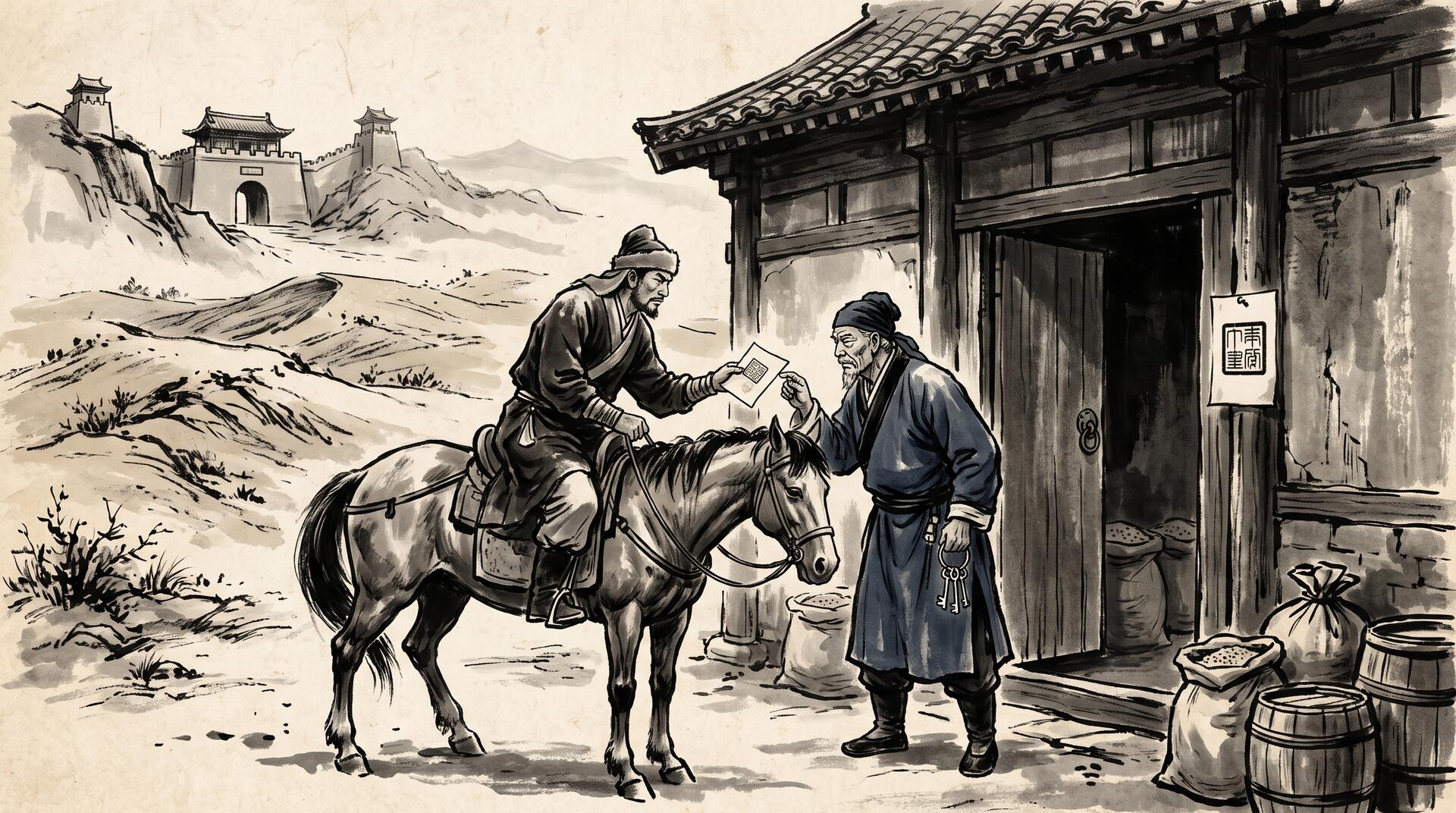
后来换了一套法子。漠北再不铸钥匙,而是由雁门关的关主(不是仓管事本人,是关主)按日给每个驿站派发一张_手谕_。手谕上盖着关主特有的花押,写清楚”此谕只发给第三驿站的领粮卒”,还标了个时辰——一个时辰之后,这张手谕自动作废,字迹会褪成白纸。
驿卒拿着手谕赶到总仓,仓管事从不用派人快马加鞭跑去雁门关核实”这花押是不是关主亲笔”——他早年就存了一张关主花押的拓片,挂在仓房墙上,来的手谕往拓片上一比对花纹,当场就能验真假,不必现问关主本人。
光花押对得上还不够。仓管事的账簿上还写着一条铁规矩:纵是关主亲笔盖的花押,若手谕上写的不是”第三驿站的领粮卒”这几个字,分毫不差,也照样不发粮——哪怕字迹一模一样,写的是”第五驿站”,一样打回去。
驿卒拿着验讦的手谕,仓管事这才写一张_临时领粮牌_给他,牌子只顶一个时辰用,过时自动作废,下次再来还得重新换谕、换牌。从此就算某张手谕、某块领粮牌不慎落入贼手,贼人拿着它,顶多也只能在那一个时辰里捣一次乱——用不了多久,牌子和谕都成了废纸,再没有一把”终身钥匙”可偷。
——到这儿你大概已经认出来了:这道手谕,其实是 Kubernetes service account token(一种 OIDC 签发的 JWT);挂在仓房墙上的花押拓片,是 AWS 那边预先注册好的 OIDC identity provider(连带它的 JWKS/证书指纹);仓管事那条”字号必须分毫不差”的铁规矩,就是 IAM trust policy 里对 sub、aud 的条件校验;而那张只顶一个时辰的临时领粮牌,正是调用 sts:AssumeRoleWithWebIdentity 换来的_临时 STS 凭证_。
这是什么
这套机制在 AWS 上叫 IRSA(IAM Roles for Service Accounts),ROSA/OpenShift 用法类似,核心都是拿 OIDC federation 替换掉长期存在 pod 里的静态 AWS access key。集群本身就是一个 OIDC issuer:每个 pod 的 service account 会被 kubelet 自动挂载一个短期、自动轮换的 JWT,里面带着 iss(签发者,即集群的 OIDC 地址)、sub(格式通常是 system:serviceaccount:<ns>:<sa>)、aud(受众,常见值是 sts.amazonaws.com)、exp(通常一小时左右过期)这几个关键 claim。
AWS 侧预先把这个集群注册成一个 IAM OIDC identity provider,同时保存好它的证书指纹(thumbprint)——这样 STS 验证 JWT 签名时,不需要实时回调集群,只要拿本地存的公钥/指纹去验签就行,速度快、也不产生额外的信任链依赖。
为什么重要
真正做访问控制的,是 IAM Role 的 trust policy 里那条 StringEquals 条件,精确锁死只有哪个命名空间下、哪个 service account 签发的 token 才配换出这个角色的权限——光有效签名不够,claim 对不上照样拒绝。最后拿到的不是永久密钥,而是 AssumeRoleWithWebIdentity 换来的临时 AccessKeyId/SecretAccessKey/SessionToken 三件套,通常一小时就过期,即便 token 或临时凭证泄露,窗口也被死死限死。这也是为什么调查 AccessDenied 时,十有八九是 sub/aud 条件写错、OIDC provider 没注册对,或者 token 已经过期。
隐喻对应表
- 漠北总粮仓 → AWS 目标资源 / IAM 角色(受保护的云端存储与服务,需要权限凭证方可访问)
- 雁门关的关主 → 集群自身 OIDC Issuer(负责签发带有数字签名的短期身份凭证(JWT))
- 每日一张的手谕 → Pod ServiceAccount Token(带有
iss、sub、aud、exp的短期身份令牌) - 手谕上的花押 → JWT 数字签名(关主私钥签名,证明手谕未被篡改伪造)
- 仓房墙上的花押拓片 → IAM OIDC Provider 与指纹(AWS 本地缓存的公钥/JWKS,无需实时回调集群即可验签)
- 字号必须分毫不差 → Trust Policy 的
StringEquals(校验sub声明必须与绑定的命名空间及 SA 完全匹配) - 一个时辰后字迹褪去 → Token 短期过期时间
exp(Kubelet 自动轮换注入,过期即失效) - 换领的临时领粮牌 → 临时 STS 凭据(
AssumeRoleWithWebIdentity换取的 1 小时临时 AK/SK) - 终身有效的铜钥匙 → 传统的静态长期 Access Key(过去常驻环境变量的长效凭据,一旦泄露风险巨大且难回收)
Beyond Yanmen Pass, a string of small outposts kept watch over short stretches of trade road. Further west sat the imperial “Grand Granary,” reserved for emergency grain requisitions.
The old rule was simple: each outpost was issued a bronze key to the granary. Once cast, a key worked forever — whoever held it could open the gate. This worked fine for years, until one day a courier’s key was lifted by a thief mid-journey. The thief was in no hurry; he sat on the key for three months before using it. The granary had no idea the key had changed hands — it opened the gate just the same. Only then did the granary keeper realize the danger: once a key like that goes missing, there’s no way to reclaim it short of sending someone all the way to the frontier to physically recast it.
So they devised a new system. The frontier no longer cast keys. Instead, the Pass Commander — not the granary keeper, the commander at the pass itself — issued each outpost a fresh chit every day. The chit bore the commander’s personal seal, stated plainly “issued only to the grain-courier of the Third Outpost,” and carried a time limit: one hour after issuance, the ink would fade and the chit would go blank.
When a courier arrived at the granary with a chit, the keeper never sent a rider back to the pass to ask “is this really the commander’s seal?” Years earlier, he’d hung a rubbing of the commander’s seal pattern on the storehouse wall. He simply compared the chit’s seal against that rubbing on the spot — no need to consult the commander in person.
A matching seal wasn’t enough on its own, either. The keeper’s ledger carried an ironclad rule: even a chit bearing the commander’s genuine seal would be refused unless it read, word for word, “grain-courier of the Third Outpost.” A chit for the Fifth Outpost, seal and all, got turned away just the same.
Only once a chit passed both checks did the keeper hand over a temporary grain token — good for exactly one hour, after which it too went blank, forcing a fresh chit and a fresh token on the next visit. From then on, even if some chit or token fell into a thief’s hands, the most damage he could do was cause trouble for that single hour. Soon enough the chit and token turned to waste paper — no more lifetime key to steal.
——By now you’ve probably recognized it: that chit is a Kubernetes service account token — an OIDC-issued JWT. The seal rubbing hanging on the storehouse wall is the OIDC identity provider that AWS registered ahead of time (along with its JWKS / certificate thumbprint). The keeper’s ironclad rule that the wording must match exactly is the IAM trust policy’s condition check on sub and aud. And that one-hour grain token is the temporary STS credential obtained by calling sts:AssumeRoleWithWebIdentity.
What it is
On AWS this mechanism is called IRSA (IAM Roles for Service Accounts); ROSA/OpenShift use an equivalent pattern. The core idea is replacing long-lived static AWS access keys sitting in a pod with OIDC federation. The cluster itself acts as an OIDC issuer: kubelet automatically mounts each pod’s service account with a short-lived, auto-rotated JWT carrying key claims — iss (the issuer, i.e. the cluster’s OIDC endpoint), sub (typically system:serviceaccount:<namespace>:<service-account>), aud (audience, commonly sts.amazonaws.com), and exp (usually about an hour).
On the AWS side, the cluster is pre-registered as an IAM OIDC identity provider, along with its certificate thumbprint — so when STS verifies the JWT’s signature, it doesn’t need to call back to the cluster in real time; it just checks against the locally stored public key/thumbprint, which is fast and avoids extra trust-chain dependencies.
Why it matters
The actual access control happens in the IAM role’s trust policy, via a StringEquals condition that pins down exactly which namespace and service account’s token may assume that role — a valid signature alone isn’t enough; a claim mismatch still gets rejected. What comes back isn’t a permanent key but a temporary AccessKeyId/SecretAccessKey/SessionToken triple from AssumeRoleWithWebIdentity, typically expiring within an hour — so even if the token or the temporary credential leaks, the exposure window is tightly bounded. This is also why, nine times out of ten, an AccessDenied investigation traces back to a mismatched sub/aud condition, a misregistered OIDC provider, or a simply expired token.
Metaphor mapping
- The Grand Granary out west → Target AWS resource / IAM Role (Protected cloud storage and services requiring temporary credentials)
- The Pass Commander → Cluster OIDC Issuer (Authority signing short-lived identity tokens (JWT) with its private key)
- The daily chit → Pod ServiceAccount Token (Short-lived JWT containing
iss,sub,aud, andexpclaims) - The seal on the chit → JWT digital signature (Cryptographic signature proving the token was not forged or altered)
- The seal rubbing on the storehouse wall → IAM OIDC Provider & thumbprint (Pre-registered JWKS/thumbprint cached locally in AWS for instant verification)
- “The wording must match exactly” → Trust policy
StringEqualscheck (Condition enforcing thatsubmatches the specific namespace and SA) - The chit that fades after an hour → Short token expiration (
exp) (Rotated automatically by kubelet to bound the window of compromise) - The temporary grain token → Temporary STS credentials (1-hour access credentials returned by
AssumeRoleWithWebIdentity) - The old lifetime bronze key → Long-lived static AWS access key (High-risk credentials embedded in pods, nearly impossible to safely rotate)