▶ Cinematic fable · Watch on YouTube ▶ 影片版寓言 · 在 YouTube 观看
汴京繁华盖世,城中立着九大商帮行会:丝绸行、茶叶行、青瓷行、药材行、香料行……行行门禁森严,库房连绵。
早先,九家行会各自为政,各自设了一部厚达数尺的“私家客籍铁册”。 凡有客商想入行会交易,必须先在门房前拜帖子、立手印,并由账房先生当面赐下一句独门暗号。 一位南来北往的客商若想把一船生丝、团茶与细瓷换成官银,便得在袖袍里揣上九本不同的小账册,脑中硬记九句全然不同的繁杂口令。
时日一长,大乱频仍。 客商脑力不济,常把丝绸行的暗号“明月照松柏”当成茶叶行的接头令,遭乱棍当场驱打出门; 更多的行商图省事,偷偷把同一句暗号抄在袖口或直接告诉九家门房,结果一旦在酒肆里失口泄露,九座行会的账房同时失窃; 最凶险的是,某家行会有位管事私吞货款被革职查办,总把头下令将他逐出商界。然而差役跑断了腿也未能及时跑遍九门,那位革职管事竟在两天之内,凭着尚未注销的药材行与青瓷行旧铁牌,从另外两处库房里硬生生提走了三万两生药与官窑细瓷!
九大行会的长老们齐聚太白楼,面面相觑,无不长吁短叹。 丝绸行的老会长拍案而起:“九门各自修铁册、各自发暗号,看似家贼难防,实则是自掘陷阱!我们必须建一座九门同奉的‘总盟公所’!”
这套震动天下的“通关盟印章程”,自此落地:
其一,“九门废私册,专奉总公所”。 九大行会彻底焚毁各自门前的私家客籍铁册,撤去门房的盘问私刑。 城池正中央设起一座金碧辉煌的“九门总盟公所”。天下商贾只需在此处递交户籍保书、勘验掌纹,由总公所的总盟主亲自登入正册。 客商从此再也不需要背诵九句暗号,一生只需牢记总公所这一处认证。
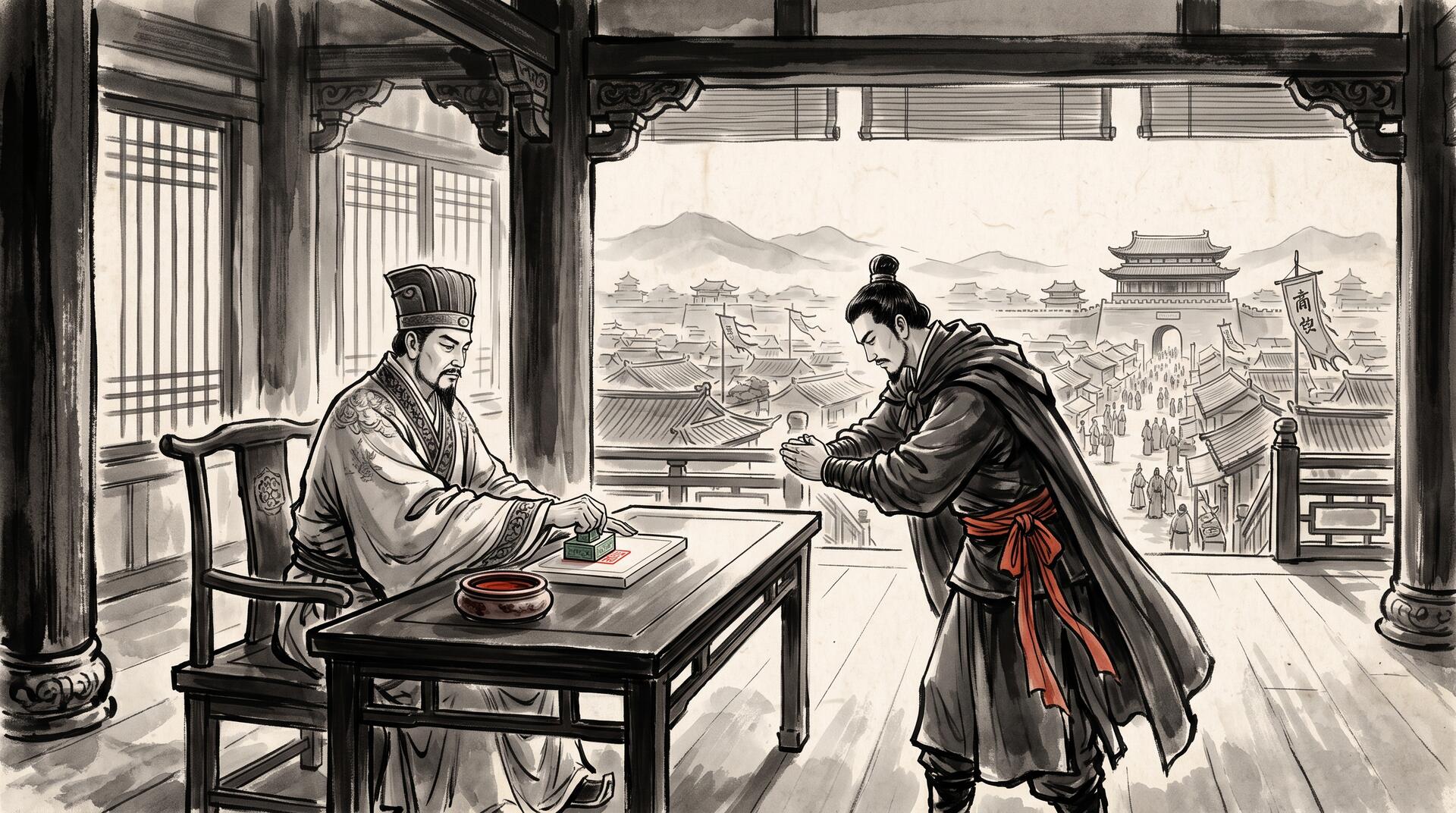
其二,“凭由引渡,按需换符”。 客商来到丝绸行谈生意,丝绸行门房不再索要口令,而是微笑递出一纸“引渡锦帖”,将客商礼貌引向中央的总盟公所。 客商踏入总公所,盟主验其面容与掌纹无误,立时取出一枚温润的玉版,以通天红泥盖下一方“九门通关盟印”。 这枚盟印极其神异:正面刻有客商的姓名与面貌特征,更分毫不差注明“本符专呈丝绸行接纳”; 客商携符折返丝绸行,门房只见盟主亲盖的通关红印,立刻躬身迎客入堂——丝绸行从头到尾无需触碰客商的私密底细,更不必为保管庞杂密码而提心吊胆。
其三,“一处削籍,九门尽绝”。 若有不良商贾胆敢欺行霸市、作奸犯科,总盟公所只需执朱笔在他名字上画上一道红叉。 这道红叉落下一瞬,不良奸商便永远无法再从总公所换出任何通关盟印。无需快马奔走通报,九大行会的金库大门在同一弹指间,同时对其死死关闭!
自此,汴京商贾由衷赞叹: “九门分立,各修深册,是各自为牢;一盟统摄,神符通达,是四海同规。 认人不假私家印,封号无须扣九门。”
— — —
这是什么
——到这儿你大概已经认出来了:这便是现代分布式微服务与云原生平台中,解决身份孤岛与访问治理的终极架构:基于 OpenID Connect (OIDC) 的联邦身份认证(Federated Identity)与单点登录(Single Sign-On / SSO)。
在传统单体或孤立系统架构中,每个应用各自维护一套用户数据库与凭证存储(如本地数据库的 users 表)。这种模式被称为身份孤岛(Identity Silos)。它带来极其致命的痛点:
- 用户密码疲劳,极易在不同网站间复用弱密码,引发严重的撞库攻击(Credential Stuffing);
- 各应用无法统一强制实施多因素认证(MFA)或精细化风控;
- 员工离职或权限撤销极其滞后,孤立系统中的幽灵账户(Orphaned Accounts)成为黑客潜伏入侵的首选后门。
联邦身份认证(Federated Identity)与 SSO 彻底颠覆了这种各自为政的混乱格局: 它通过标准化的信任协议(以 OIDC 为黄金标准),将身份认证的职责从成百上千个应用(业务行会)中完全抽离出来,集中委托给一个统一的身份提供商或身份代理(Identity Provider / Identity Broker,如 Okta、Azure AD、Keycloak、Ping Identity)。
在 OIDC 联邦单点登录的标准工作流中:
- 重定向引渡(Redirect Flow):用户访问应用 A(Relying Party / Client)时,应用 A 并不弹出本地登录框,而是将用户浏览器安全重定向到中央 IdP 的认证页面;
- 一次认证建立会话(Primary Authentication & SSO Session):用户在 IdP 完成高强度的统一身份核验(如密码 + 硬件通行密钥 FIDO2/WebAuthn + 动态 MFA)。IdP 在浏览器植入受保护的全局 SSO Session Cookie;
- 基于签名的授权码换票(Code Exchange & ID Token Issuance):IdP 生成临时授权码(Authorization Code)并重定向回应用 A。应用 A 的后端向 IdP 的令牌端点发起请求,安全换取一枚带有数字签名的 ID Token(即故事中的通关盟印)。应用 A 本地验证签名与受众(
aud),确认用户合法登入; - 无感静默单点登录(Seamless SSO):当该用户紧接着访问应用 B 时,应用 B 同样将浏览器重定向至 IdP。此时 IdP 发现用户已具备有效的全局会话,无须用户再次输入密码,瞬间完成签名验票,将针对应用 B 的独立 ID Token 发回。
为什么重要
联邦身份认证与 SSO 构成了现代零信任(Zero Trust)安全大厦的基石:
- 凭证收拢与攻击面收敛(Centralized Credential Governance): 密码或生物特征凭证只在唯一的中央 IdP 处提交与验证,成百上千个下游微服务和 SaaS 应用永远无法接触用户的真实密码。即便某个应用发生注入泄露,黑客也拿不到哪怕半个密码哈希。
- 全局即时吊销(Instant Single-Point Revocation / SLO): 当员工离职或设备失窃时,安全管理员只需在中央 IdP 禁用该账号或终止全局 Session。无论是通过下发短过期的 ID Token(如 5 分钟)、结合动态 Back-Channel Logout,还是连续令牌内省,所有接入系统的访问权限都在瞬息之间被统一熔断,彻底斩断了“逐个系统清理账户”的遗漏灾难。
- 一致的安全合规姿态与极致体验: 企业可以在中央 IdP 统一编排复杂的条件访问策略(如“非内网 IP 强制刷 Face ID”、“危险地理位置直接阻断”),而无需各个业务系统自行重复造轮子。用户则享受“一次登录、畅游全域”的无缝体验。
隐喻对应表
- 汴京九大独立商帮行会 → 分布式架构中的各独立应用与微服务(Relying Parties / SPs)
- 各行会私家客籍铁册与暗号 → 传统的本地独立用户数据库(Identity Silos)与密码凭证
- 行会递出的引渡锦帖 → 客户端发起的 OAuth/OIDC 认证重定向(Authorization Redirect)
- 耸立于城池中央的九门总盟公所 → 集中式身份提供商或身份代理(Identity Provider / Identity Broker)
- 客商在总公所验明正身 → 用户在 IdP 统一进行主凭证认证(MFA / SSO Login)
- 通天红泥盖下的通关盟印 → IdP 签发的标准 OIDC 身份令牌(ID Token / JWT)
- 盟印上刻明“专呈丝绸行” → ID Token 中精确定位的受众声明(aud = silk_client_id)
- 凭盟印畅行其余八座行会 → 单点登录机制(Single Sign-On,复用 IdP 全局会话)
- 总公所朱笔削籍即刻九门封堵 → 集中式统一权限吊销与单点登出(Single Logout / Instant Revocation)
In the magnificent capital of Bianjing, nine great merchant guilds dominated the avenues of trade: the Silk Guild, the Tea Guild, the Fine Porcelain Guild, the Herbal Medicine Guild, the Spice Guild, and more. Each guild hall stood behind guarded iron gates, overseeing sprawling courtyards of precious wares.
In earlier years, each of the nine guilds governed its own domain in utter isolation, keeping a massive iron-bound “Private Ledger of Strangers” at its front gate. Whenever a traveling merchant sought entry to trade, he was obliged to present ancestral certificates, press his handprint into wet wax, and commit a secret verbal counter-pass to memory under the stern gaze of the head clerk. A traveling merchant wishing to trade bolts of raw silk, bricks of compressed tea, and crates of porcelain had to tuck nine separate registration slips into his sleeves, straining his mind to memorize nine intricate, unrelated passwords.
As decades passed, chaos festered across the capital. Exhausted merchants inevitably misremembered, shouting the Silk Guild’s watchword “The Moon Illuminates the Pines” before the Tea Guild’s gatehouse, only to be beaten with quarterstaves and cast into the street as suspected spies. Other weary traders resorted to dangerous shortcuts, writing their passwords inside their cuffs or sharing the exact same phrase across all nine guild doors. When a single loose word slipped across a wine-table, nine great guild treasuries were stripped bare overnight. Worst of all was the day an elder accountant of the Medicine Guild was caught embezzling guild silver and exiled from the empire. Though messengers raced on horseback, they failed to alert all nine gates before dusk. Armed with his still-active bronze entry tallies from the Tea and Porcelain halls, the disgraced exile looted thirty thousand taels of celestial celadon and imperial herbs before vanishing into the western hills!
The masters of the nine guilds gathered in solemn conference atop Taibai Tower, shaking their heads in grief. The venerable Master of the Silk Guild struck the cedar table: “Keeping nine fortified ledgers and demanding nine private ciphers felt like ironclad defense, but in truth, it was a trap of our own making! We must erect a single Central Guild Alliance Hall, revered by all nine gates!”
The legendary Statutes of the Master League Crest was born:
First, “Abolish the Private Ledgers; Consecrate the Central League”. The nine guilds tossed their moldering private ledgers into a communal bonfire, dismissing the interrogating gatekeepers forever. In the absolute center of Bianjing rose the splendid Central Guild Alliance Hall. A visiting merchant had only to present his lineage and record his palm-lines once before the Grand Chancellor of the League, who inscribed his name into the Imperial Register. From that dawn onward, no traveler ever memorized nine passwords; a single master registration anchored his commercial life across the realm.
Second, “Referral by Scroll, Minting the Master Crest”. When a merchant arrived at the Silk Guild to trade, the gatekeeper no longer demanded a secret counter-pass. With a courteous bow, the gatekeeper handed him a silk-bound Referral Scroll, bidding him walk a short path to the Central League Hall. At the League Hall, the Grand Chancellor verified the merchant’s visage and handprint against the master rolls. Taking up a rectangular slab of warm white jade, the Chancellor pressed the colossal Nine Gates Master Crest into vermillion ink, stamping the stone with authoritative splendor. This crest possessed remarkable discernment: upon its face were carved the merchant’s name and portrait, accompanied by an explicit, immutable notation: “Minted solely for the honorable inspection of the Silk Guild.” The merchant walked back to the Silk Guild. The moment the gatekeeper beheld the vibrant vermillion seal of the League Master, he bowed low and flung the inner doors wide. The Silk Guild never touched the merchant’s private master passwords, freed forever from the agony of safeguarding dangerous secrets.
Third, “One Stroke of the Vermillion Brush; Nine Gates Shut in One Breath”. When an unscrupulous rogue was discovered forging manifests or defrauding partners, the Grand Chancellor did not dispatch messengers across the city. He dipped his brush into thick vermillion ink and drew a heavy red cross across the rogue’s master entry. The very instant that ink met paper, the scoundrel was permanently barred from receiving any further League Crests. Without a single courier galloping through the alleyways, the vaults of all nine guilds locked shut against him in the span of a single heartbeat!
Ever after, the merchants of the capital chanted an enduring proverb: “Nine gates keeping nine secret scrolls is but nine self-made prisons; one alliance stamping one sacred seal is universal order for the four seas. Authenticate the soul through the central crest; bar the treacherous without knocking upon nine doors.”
— — —
What it is
By now the architecture is unmistakable: this is the crown jewel of modern cloud identity governance and distributed Zero Trust security: Federated Identity and Single Sign-On (SSO) built on OpenID Connect (OIDC).
In traditional monoliths and fragmented architectures, every application independently maintains its own local user database and credential store (e.g., local users tables). This architectural anti-pattern is known as Identity Silos. It introduces severe operational vulnerabilities:
- Credential Fatigue and Reuse: Users struggle to remember dozens of complex passwords, resorting to weak phrases and cross-site reuse, opening the door to catastrophic Credential Stuffing attacks;
- Fragmented Security Posture: Individual applications cannot consistently enforce enterprise security baselines like Multi-Factor Authentication (MFA) or adaptive risk policies;
- Offboarding Lag and Orphaned Accounts: When an employee departs or a partner contract terminates, administrators must manually revoke accounts across dozens of disjointed tools. Inevitably, forgotten orphaned accounts remain active indefinitely, serving as covert ingress points for attackers.
Federated Identity and SSO completely dismantle this chaos: Through standardized trust protocols—with OpenID Connect (OIDC) as the global gold standard—the heavy responsibility of authentication is stripped entirely from application endpoints (the nine guilds) and delegated to an authoritative Identity Provider or Identity Broker (IdP, such as Okta, Microsoft Entra ID, Keycloak, or Auth0).
In the standard OIDC Federated SSO lifecycle:
- The Authorization Redirect Flow: When a user navigates to Application A (the Relying Party / Client), the app does not present a local login form. Instead, it securely redirects the user’s browser to the central IdP’s authentication endpoint;
- Central Authentication & Global Session: The user authenticates once at the IdP under strict security controls (e.g., FIDO2 Passkeys, hardware MFA, IP reputation checks). The IdP establishes a secure, encrypted global SSO session cookie within the user’s browser;
- Cryptographic Token Issuance: The IdP issues a one-time Authorization Code, redirects back to Application A, and Application A exchanges this code back-channel for a signed ID Token (the Master Crest). Application A verifies the cryptographic signature locally and inspects the audience claim (
aud: app-a-client-id) to admit the user; - Frictionless Single Sign-On: When the user subsequently opens Application B, Application B similarly redirects to the IdP. The IdP detects the active global session cookie, generates an ID Token specifically minted for Application B without prompting the user for credentials, and redirects immediately. The user transitions seamlessly between independent enterprise services.
Why it matters
Federated Identity and SSO form the bedrock of enterprise Zero Trust infrastructure:
- Credential Surface Minimization: Sensitive credentials (passwords, biometrics) are presented solely to the central IdP. Downstream applications and microservices never handle, transmit, or store user passwords. Even if an individual application suffers a devastating SQL injection breach, zero user credentials exist in its database to be compromised.
- Instantaneous Global Revocation (Single Point of Revocation / SLO): When an employee leaves an organization or an account is compromised, security operators disable the identity in the central IdP. Through short-lived ID Token lifetimes (e.g., 5–15 minutes), dynamic Token Revocation, or Back-Channel Logout protocols, access to the entire fleet of enterprise services is severed in seconds, eliminating the human error of orphaned credentials.
- Centralized Policy Orchestration: Security teams can enforce sophisticated conditional access rules (e.g., “enforce biometric MFA if connecting outside corporate VPN”, “block access from anomalous geographical coordinates”) in one central control plane, rather than re-implementing authentication guards across fifty disparate engineering teams.
Metaphor mapping
- The nine independent merchant guilds of Bianjing → Independent applications and microservices (Relying Parties / SPs)
- Private iron-bound customer ledgers and secret passwords → Vulnerable local user databases (Identity Silos) and stored passwords
- The referral scroll handed to the merchant at the guild door → The OIDC authorization redirect to the Identity Provider
- The Central Guild Alliance Hall at the heart of the city → Central Identity Provider / Identity Broker (IdP, e.g., Okta, Keycloak)
- Merchant verifying palm-lines and lineage at the Central Hall → User performing primary authentication with MFA at the IdP
- The jade plaque stamped with the Nine Gates Master Crest → Signed OIDC ID Token (JWT) minted by the IdP
- The chiseled notation “Minted solely for the Silk Guild” → The audience claim (
aud = silk_client_id) in the ID Token - Moving freely through all remaining eight guilds without re-entering passwords → Single Sign-On (SSO) leveraging the IdP’s active session
- The vermillion cross drawn across the register instantly shutting all nine gates → Centralized instant user deprovisioning and Single Logout (SLO)